Can Solar Energy Support Data Centres in Nigeria?
Nigeria is witnessing rapid digital expansion, and with it, a growing demand for reliable energy to power data centres. Traditional electricity grids consistently fall short of meeting these heavy requirements, pushing businesses to explore renewable alternatives as a strategic necessity rather than an optional upgrade.
The Current State of Data Centre Energy in Nigeria
Most data centres in Nigeria rely heavily on diesel generators to compensate for an unstable national grid. This dependency is expensive, environmentally damaging, and leaves operators exposed to volatile global fuel prices. Frequent power fluctuations force facilities to maintain redundant systems, further inflating costs and complicating the path to efficiency.
Meanwhile, digital demand is accelerating. The rapid adoption of mobile connectivity and cloud services is driving exponential data consumption, requiring robust power frameworks to support high-density computing. Without addressing current energy constraints, Nigeria’s potential for sustainable digital growth will remain severely limited.
| Power Source | Reliability | Cost Impact | Environmental Score |
| National Grid | Low | Moderate | Medium |
| Diesel Generators | High | Very High | Low |
| Solar/Hybrid | High | Low (Long-term) | High |
Debunking Common Myths
Several persistent misconceptions discourage operators from making the switch to solar.
Myth: Solar cannot provide consistent base load power. Modern solar deployments are supported by advanced Battery Energy Storage Systems (BESS) and hybrid configurations that ensure seamless transitions between solar generation and backup power — maintaining uptime even when the sun is not shining.
Myth: Solar infrastructure is too expensive. While upfront capital costs are significant, the long-term savings on diesel fuel and generator maintenance are substantial. Over time, the total cost of ownership becomes considerably lower, offering a compelling return on investment.
Myth: Solar panels underperform in tropical climates. Today’s photovoltaic modules are engineered to withstand intense heat while maintaining high output. With proper ventilation and mounting techniques, Nigerian operators can achieve reliable year-round performance.
Technical Challenges
Integrating solar into data centre operations is not without hurdles. Energy storage is the most critical — lithium-ion battery systems act as buffers during low sunlight periods, storing excess daytime energy for night-time use. Smart monitoring software allows facilities to predict load requirements and optimise discharge cycles.
Space constraints are another consideration, particularly for urban facilities. Rooftop solar arrays offer a practical solution where land is scarce, though structural assessments are essential. For larger clusters, utility-scale solar farms on city outskirts provide greater scalability, though they require dedicated transmission infrastructure.
Grid synchronisation also demands attention. Sophisticated inverters and control systems are needed to manage the variable nature of solar output and protect sensitive server equipment from fluctuations in the national grid.
Economic Viability
The financial case for solar is strongest when viewed over the long term. On-site power generation hedges against volatile diesel prices, while lower maintenance requirements for solar systems — compared to combustion generators — reduce operational expenditure significantly.
The primary barrier remains initial capital outlay. However, financing structures such as Power Purchase Agreements (PPAs) and equipment leasing can spread costs over several years, improving project bankability. One additional complexity unique to Nigeria is currency volatility: since most solar components are imported, exchange rate fluctuations can inflate procurement costs. Phased procurement strategies help mitigate this risk.
Regulatory Environment
A supportive policy framework is essential to accelerating adoption. The federal government currently offers import duty waivers on solar panels and batteries, tax holidays for qualifying companies, and low-interest financing through development finance institutions. These incentives can meaningfully offset initial capital costs for operators willing to navigate the process.
For those pursuing independent power producer status, compliance with licensing and safety standards set by the Nigerian Electricity Regulatory Commission (NERC) is mandatory. NERC provides the regulatory oversight that protects market stability and sets the grid connection codes operators must follow. Proactive engagement with the commission typically smooths the approvals process.
Opportunities: Hybrid and Emerging Solutions
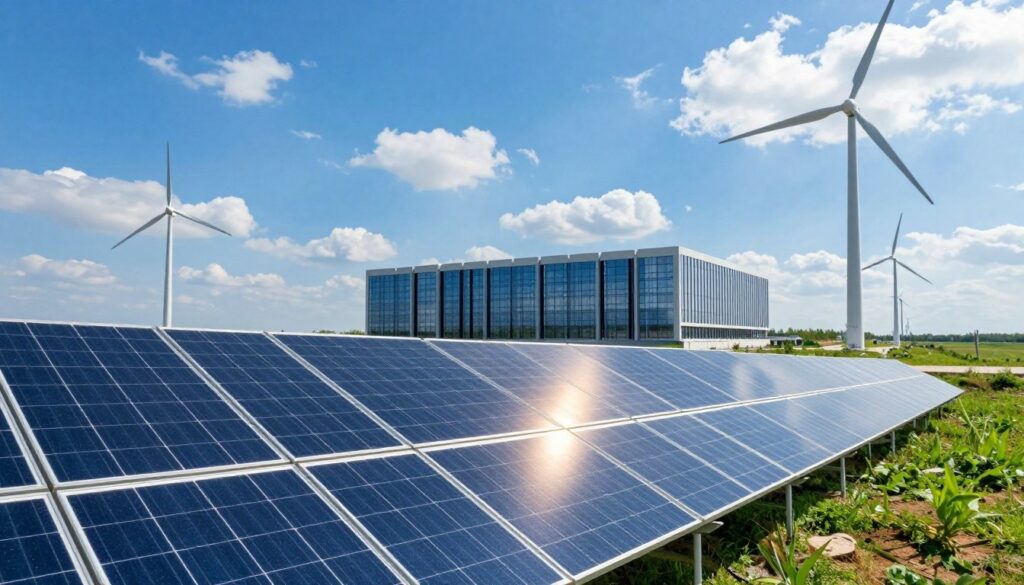
The most practical path forward for most operators is a hybrid energy model — combining solar arrays with existing diesel generators and battery storage. Solar handles base loads during daylight hours; generators provide backup during peak demand or extended low-sunlight periods. This setup reduces fuel consumption while preserving reliability, extending the lifespan of mechanical equipment in the process.
For larger data centre clusters, microgrid technology offers even greater resilience. By interconnecting facilities to share energy resources and balance loads, operators reduce individual capital burdens and create a more stable local energy environment.
Looking further ahead, green hydrogen presents a promising long-term storage solution. Unlike batteries, hydrogen can store vast amounts of energy without degradation, making it ideal for managing seasonal solar variation. Though the technology is still maturing, early investment in hydrogen-ready infrastructure could position Nigerian operators at the forefront of the global energy transition.
| Energy Solution | Primary Benefit | Reliability Level | Cost Efficiency |
| Solar + Diesel | Immediate Fuel Savings | High | Moderate |
| Microgrid Clusters | Shared Resilience | Very High | High |
| Green Hydrogen | Long-term Storage | High | Developing |
Nigeria stands at a pivotal moment. Solar power deployed through hybrid systems, supported by sound financing, and backed by clear regulatory frameworks offers a credible and increasingly cost-effective path to energy security for data centres. Operators who act now will be best placed to thrive in a rapidly growing digital economy.
Royal Power and Energy Limited is uniquely positioned to be your partner, bringing deep local knowledge, engineering excellence, and a future-ready approach.
Learn more about powering your business the smart way. Email sales@rpeltd.com to get started.
FAQ
Can solar energy provide the consistent base load power required for a data centre?
While solar energy is inherently intermittent, it can effectively support base load power requirements when integrated with advanced energy storage systems and battery management systems. By utilising hybrid energy solutions that combine solar with the Nigeria power grid and existing diesel generators, operators can ensure the 24/7 reliability required for Tier III data centres.
Is solar energy adoption financially viable for local operators in Nigeria?
Although the initial capital expenditure for renewable energy infrastructure is significant, the long-term operational savings are substantial. Transitioning to solar provides a crucial hedge against the volatile costs of imported diesel and the impact of currency fluctuations on fuel prices, ultimately reducing the total data centre operational costs over the system’s lifespan. You can send us a mail today at sales@rpeltd.com to get an estimate.
What is the role of the Nigerian Electricity Regulatory Commission (NERC) in this transition?
The Nigerian Electricity Regulatory Commission is responsible for the regulatory and policy frameworks that govern the sector. They oversee the licensing and compliance for independent power producers, allowing data centres to generate their own clean electricity and benefit from government incentives designed to encourage renewable energy adoption.